Senda · speculative descendant
Dune Weevil
Larinus arenarius
Generation 5 · descended from Larinus stebbingi (thistle weevil)
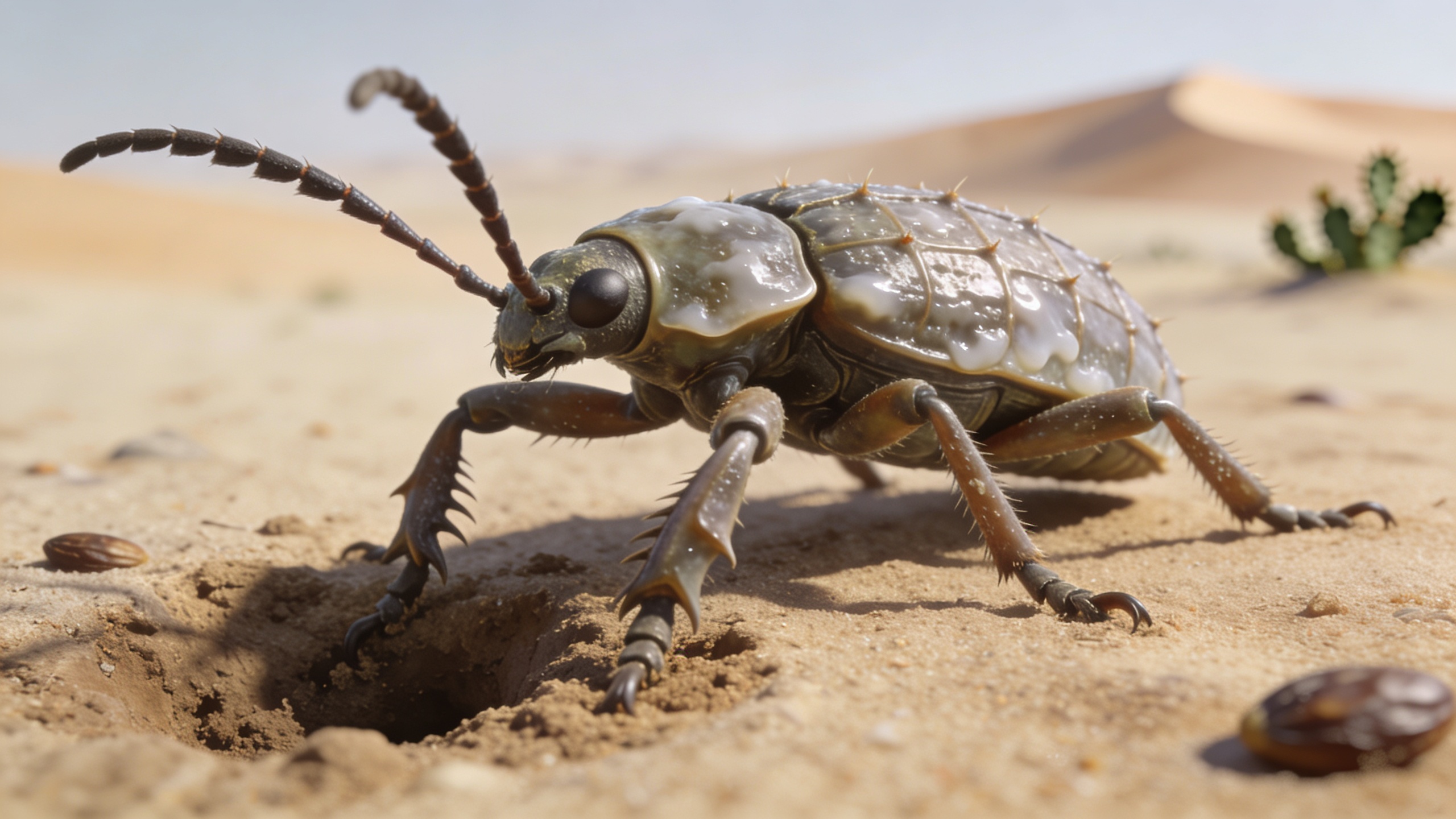
As the climate became drier and sand dunes more prevalent, Larinus stebbingi adapted to the new terrain. Over time, its descendants developed stronger front legs for burrowing into the sand and longer antennae to detect prey and predators in the shifting dunes. Their diet shifted to specialize on the seeds of Opuntia spp., which were abundant in the area. The elytra became more armored to protect against the abrasive sand and to conserve water.
Traits
- Size
- 15 mm body length
- Diet
- Specialized on Opuntia spp. (Prickly Pear) seeds
- Habitat
- Dunes and sandy areas
- Locomotion
- Burrowing with modified front legs
- Defense
- Armored elytra
Notable features
- Longer, more powerful antennae for detecting vibrations in sand
- Waxy coating on elytra to prevent water loss
Generated by Happy Naturalist AI from a real walk. Speculative biology — not a real species.