Senda · speculative descendant
Thorn-Thistle Borer
Eryngiorestis thorntoni
Generation 3 · descended from Trichodes ornatus (False Blister Beetle)
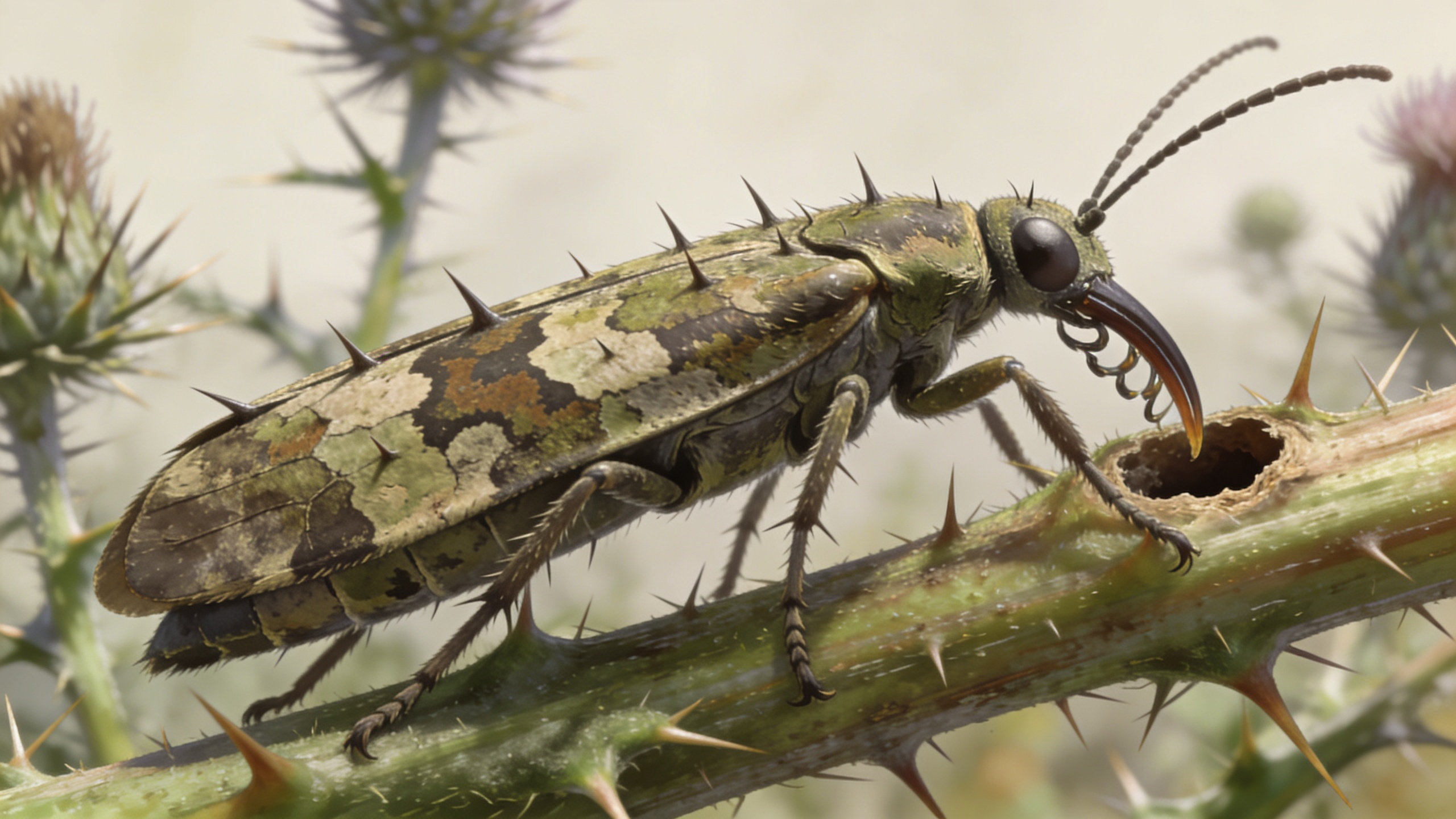
Trichodes ornatus, which previously fed on a variety of plants, began to specialize on Eryngium (Thistle) and similar spiny plants. Over generations, its larvae developed the ability to bore into the tough stems of these plants. As a defense, the adults evolved camouflage on their elytra to blend in with the thistle spines, reducing predation risk. This specialization allowed them to thrive in areas where other beetles struggled to survive.
Traits
- Size
- 10 mm body length
- Diet
- Larvae bore into stems of Eryngium (Thistle) and related species
- Habitat
- Thistle and prickly plant communities
- Locomotion
- Active on plant surfaces, larvae bore into stems
- Defense
- Camouflage on elytra to blend with thistle spines
Notable features
- Specialized mouthparts for boring into tough thistle stems
- Loss of bright coloration, adopting a more cryptic appearance
Generated by Happy Naturalist AI from a real walk. Speculative biology — not a real species.