Senda · speculative descendant
Urban Shield Ant
Monomorium urbanicum
Generation 5 · descended from Monomorium minimum (little black ant) · evolved in mixed:unknown
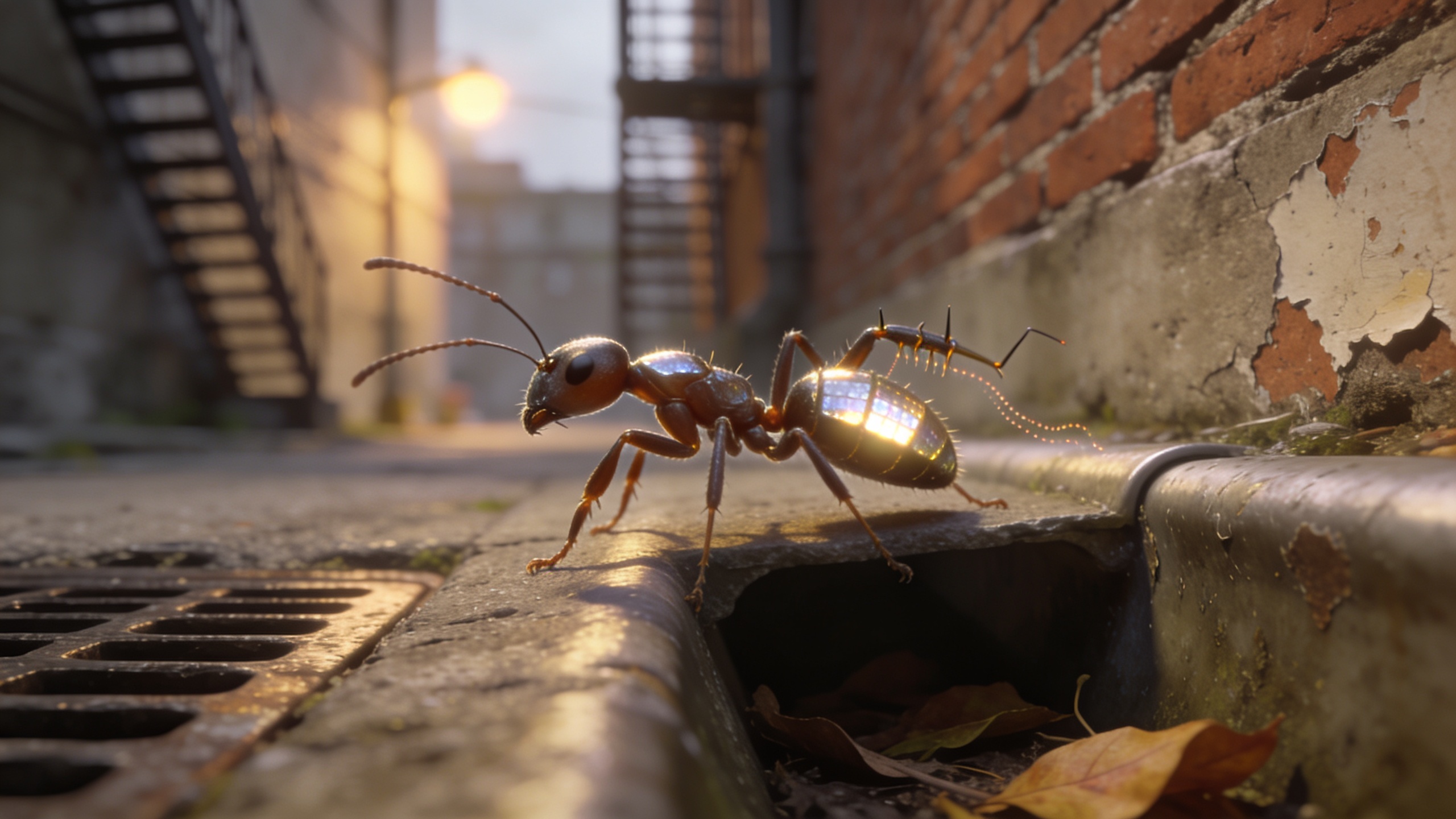
As urban development intensified, Monomorium minimum adapted to exploit new food sources and habitats. They began to thrive in the warm, sheltered environments of buildings and rooftops, developing a reflective exoskeleton to cope with intense sunlight and a modified defense mechanism to deter larger urban predators. Over generations, they evolved to communicate more effectively, using chemical signals to recruit to food sources.
Traits
- Size
- 1.5 mm body length
- Diet
- sweet liquids, oils, and proteins from human waste
- Habitat
- rooftops, building facades, and soffits
- Locomotion
- walking, climbing
- Defense
- modified stingers for defense against larger urban predators
Notable features
- reflector-like sheen on exoskeleton to reflect sunlight
- chemical signals for recruitment to food sources
Generated by Happy Naturalist AI from a real walk. Speculative biology — not a real species.